

Cinch Cord: Mohair vs. Alpaca- What’s the Difference?
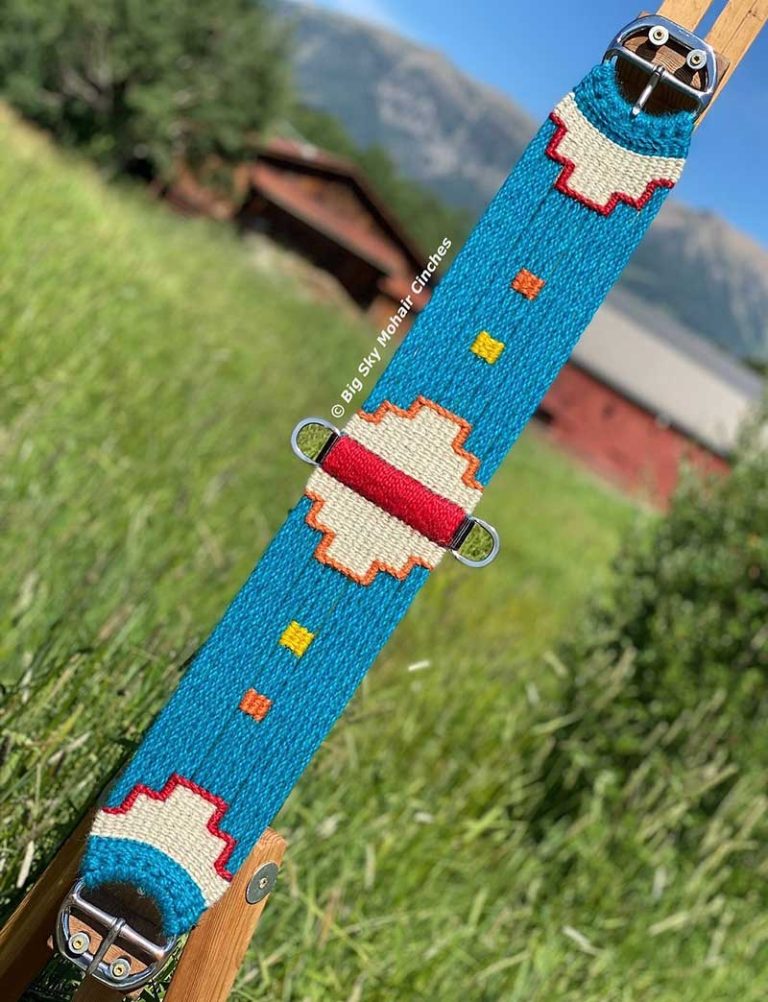
Here we are again- in the blog. And I know you woke up wondering to yourself “Self, I wonder what the difference is between Mohair and Alpaca cinch cord?” Well, you are in luck because I also woke up this morning and thought to myself “Self, we should write a blog post about that today.” So here we go. You will often see Mohair in a wide range of beautiful colors and that tends to be what sucks people in to Mohair cinches but that’s not the only benefit- after all- it is called the “Diamond Fiber”! Mohair itself is extremely durable, resilient and strong. It has amazing anti-microbial properties and is extremely breathable and wicks moisture beautifully. As mentioned before, people are usually drawn to the colors that Mohair comes in. This is one of the most obvious differences between Mohair and Alpaca cinch cord. Mohair is easily dyed and Alpaca does not take dye as well so it is only offered in a handful of natural colors. Any of the Alpaca colors you see on our website are dye-free :) And for those of you who are wondering- we are able to combine the two fibers in one cinch or breastcollar project. For example- when folks want an Alpaca cinch body with some details added in Mohair for a pop of fun color, that’s no problem at all and we are happy to do it! In the photos below, the solid blue cinch is all 100% Mohair and the brown cinch is a 100% Alpaca cord body with Mohair accent colors. Alpaca is also a great option for those horses that are have sensitive skin. Alpaca cinch cord is a little “fluffier” and has a little more loft to it, it’s even softer than Mohair and Mohair is already pretty dang soft! Alpaca is also very breathable and wicks moisture well, just like Mohair. Anytime you are wicking moisture away from a sweaty skin surface, you are decreasing the likelihood of galling or cinch sores. If a natural fiber like Alpaca or Mohair sores your horse, it is likely in need of a good washing to get the sweat and dirt buildup out of it. In our experience, no matter how well constructed the cinch is, if it is filled with dirt and sweat you are still running the risk of galling your horse. Another thing that is important to note about Mohair and Alpaca cinch cord- it will NOT stretch out over time with use if it is true 100% Mohair or 100% Alpaca and we NEVER use blends! Most store bought or big box/name cinches are actually blends even if they say 100% Mohair or 100% Alpaca on the tag. They are able to advertise as such because there is 100% Mohair or 100% alpaca in the cord, but it is not the total composition of the cord. The Mohair or Alpaca is often blended with wool or another cheaper fiber to reduce cost and will stretch (and stay stretched out) over time. If it is true 100% Mohair or 100% Alpaca cord- if you order a 32” cinch and you ride it for several years, you will still have a 32” cinch if you re-measure it years later – it will not stretch to a larger size after use. Your cinch will look smaller than the size you ordered when it isn’t cinched up but when you do up your latigos, the cinch will “give” to the size you ordered, then it will relax back down after you take the tension off. With both of these being natural fibers, they will also expand and contract with the horse’s ribcage wonderfully, creating more freedom in the barrel and better breathing. A material like neoprene will not “give” or move with the ribcage at all, for example. Natural fiber cinches have been used for over one hundred years and along the way, synthetics and other materials have been introduced into the cinch world. For us? We will only choose 100% Mohair or 100% Alpaca because as they say- “if it ain’t broke, why fix it?” and that’s pretty hard to argue with! As always, let us know if you have any questions, we’d be glad to answer them :) Happy Trails!

Mohair Cinch Care
Most Mohair gear won’t need to be washed more than once a year. Even then, a basic rinse in a bucket of water, and running a hose over it, will loosen the sweat and dirt enough to easily wash away! If you notice parts that are getting hard or crunchy, even just taking a hard brush to it will oftentimes work most of the dirt free, without even needing to use water. If you’re riding in clay-based mud, etc, then water could definitely be needed to get it clean. However, if the side against the horse is free of debris and is still soft and pliable, it probably doesn’t need to be washed yet. Check out the easy steps below for cleaning your Mohair gear! With breastcollars, just remove your leather pieces before following these steps. STEP 1: Remove any burrs/stickers gently. You can also brush with a hard brush on the back side of the cinch to knock dirt/sweat loose. Cleaning a Mohair Cinch with a hard brush Dunking in a water bucket STEP 2: Swish or dunk in a bucket of cool water, holding by the buckles. You can add a small amount of horse shampoo of gentle soap (Woolite, etc) if desired. STEP 3: If the cinch is REALLY dirty, you can let it soak for a few minutes. Rinse with a hose until the water runs clear. Lay flat or hang to dry out of direct sunlight. DO NOT: Powerwash (can damage the fibers!), use a washing machine (can “felt” the Mohair!) , hot water (can weaken the dye molecules and cause fading!) or remove the felted in hair – (this acts as extra padding for the horse.) As always, if you ever have any questions, please don’t hesitate to contact us!

Roper vs. Straight Cinch Detail Work
Why some patterns won’t work on both! It’s much simpler to translate a roper pattern to a straight cinch than it is a straight cinch pattern to a roper cinch. Because the cords on a straight cinch remain totally parallel, as we build detail work from the bottom up, it is much easier to keep the cords lined up and avoid weird bunching which could cause a lot of discomfort for the horse. On a roper cinch, the cords are narrower at the buckles and flare wider toward the center, so they aren’t actually a parallel surface to work with detail wise. When we add detail work, the 2 ply woven in between the 8 ply cords pushes the cords apart a bit. Since we are working with a (basically rectangular) shape on a straight cinch, we can build detail work evenly/symmetrically (visualize coloring block patterns on graph paper). On a roper cinch, we are basically building detail shapes on two triangles. As we continue to add detail work that pushes the cords apart, since they are already traveling at an angle (NOT parallel!), if we add too much as it travels toward the buckle (as the cords narrow), it will affect how the cords lie, and in turn how it wears on the horse. That is why most of our roper cinch detail work is put in the center of the cinch, and there is typically very little (if any) up by the buckles. When we are deciding what patterns we can and can’t do, we basically look at the “working area” where we can add two-ply that won’t affect how the cords will lay. If the detail work we do could possibly affect how the cords sit, we won’t do it- simple as that. We want the detail work to sit flat, even, and allow the 8 ply cords to travel correctly. Our job to make you beautiful gear that is, above ALL, comfortable for your horse. Sometimes, unfortunately, we do need to say “no” to certain patterns if we think function will be affected! Hopefully, this helps clarify a few things for everyone! We will always do our best to get as close as we can to achieve the look that you are after, but also know that we won’t compromise overall function/comfort to the horse either! We want your gear to last a long time and allow your horse to perform well. Because a comfortable horse can get the job done!
